Your hands are free.
Your gear follows.
QBag is an autonomous hovering carry system — a backpack that is never worn. Dual-mode magnetic levitation operates on any surface without tracks, rails, or surface modification.
It follows you like a shadow — floating close behind, matching pace and direction.
Follows like a shadow. Lands anywhere.
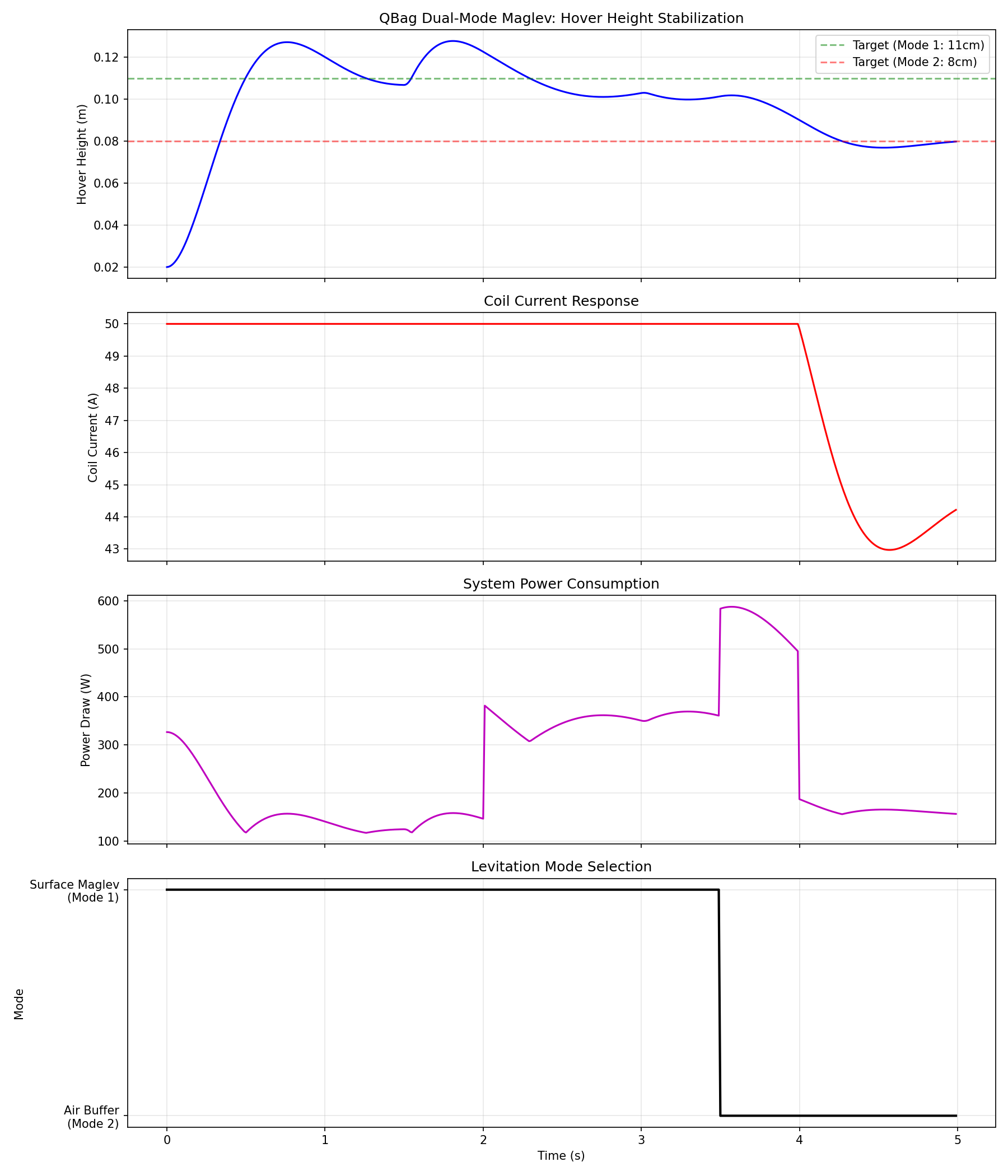
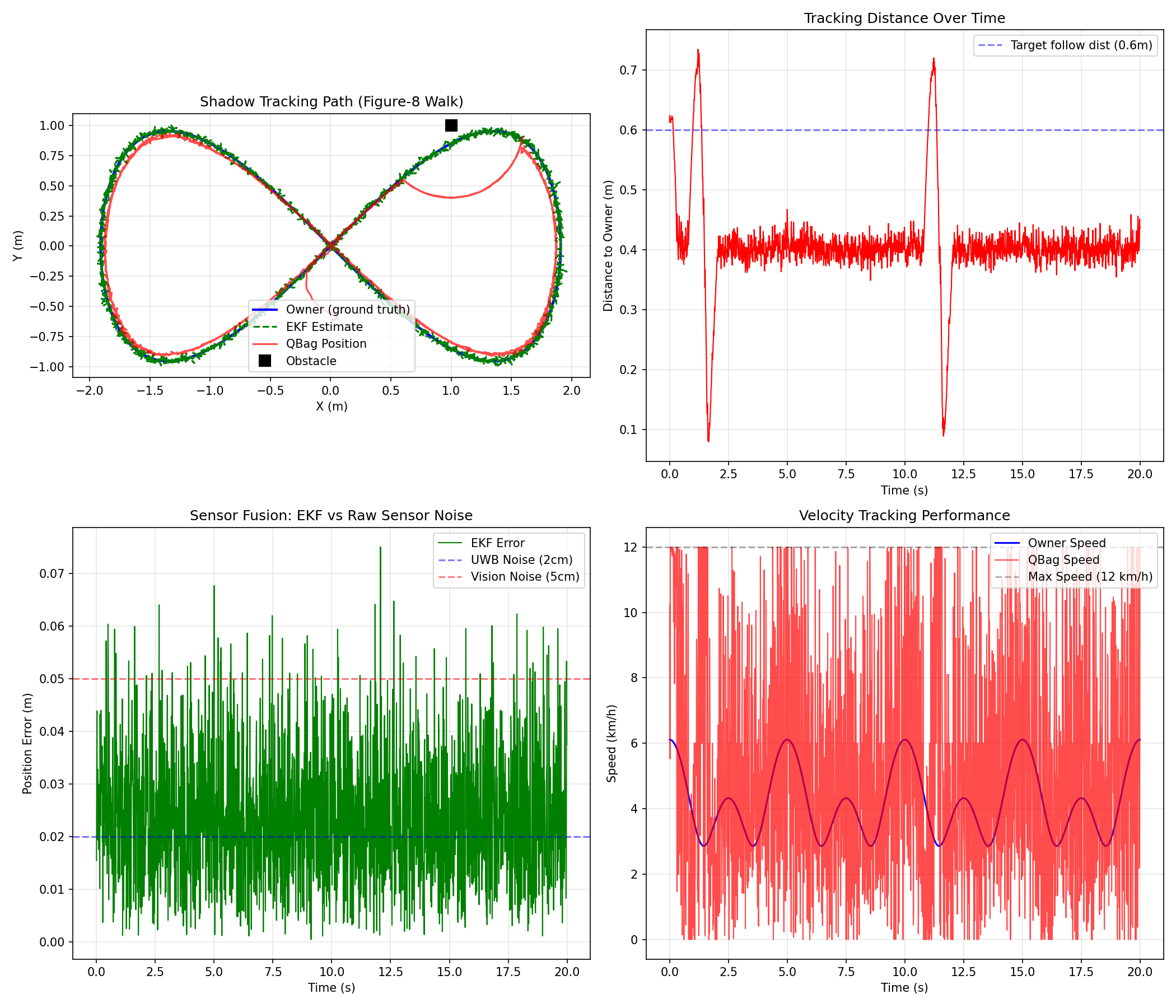
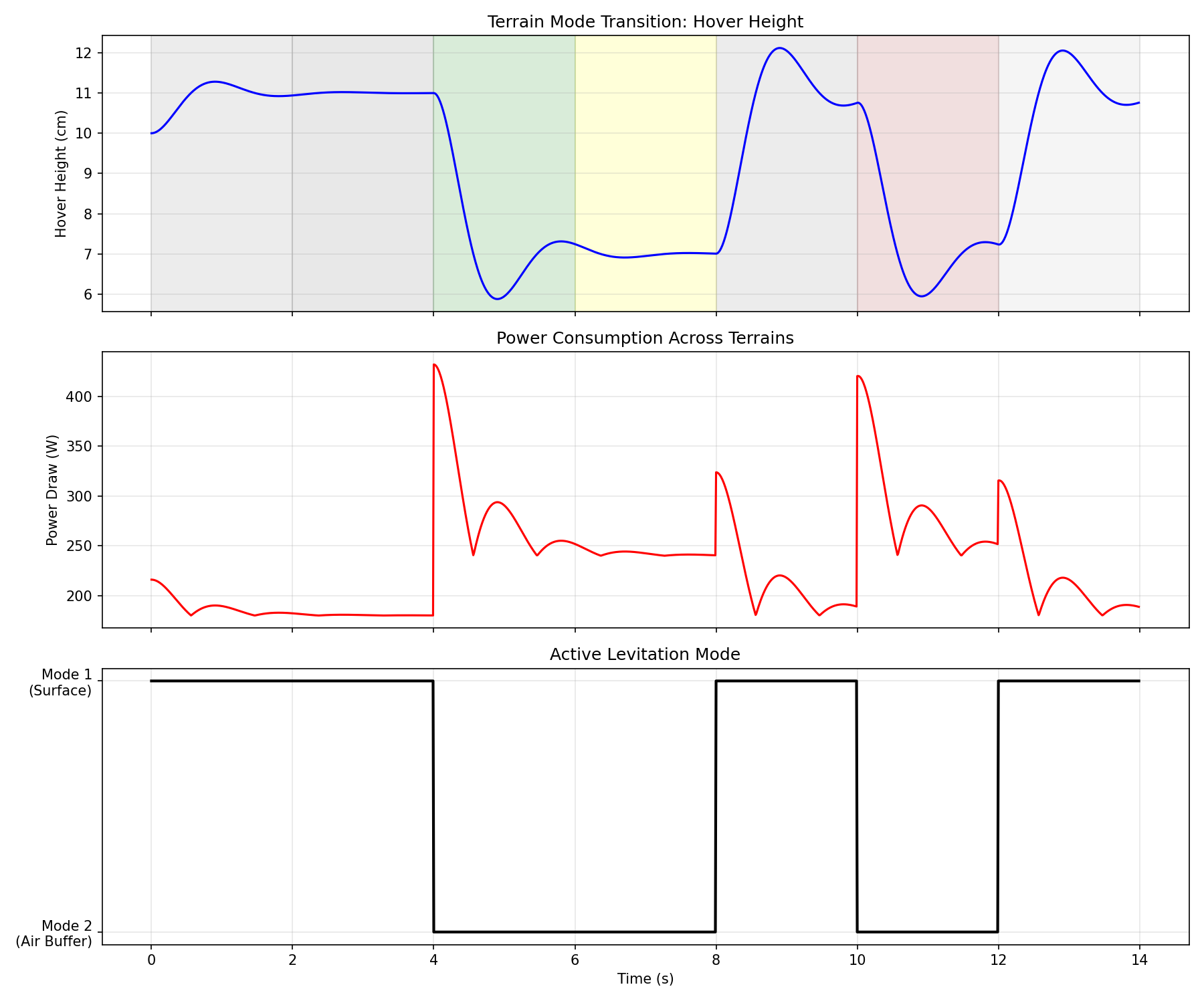
Run the live sim: the QBag floats at hover height behind its owner, maglev wobble corrects itself in real time, the shadow-tracking link holds lock, and terrain shifts — flat, rough, incline — trigger seamless dual-mode switching.
Dual-Mode Maglev
Surface-interactive levitation plus an ionized air buffer — the QBag rides any terrain on Earth without tracks, rails, or surface modification.
Shadow Tracking
UWB positioning, stereo vision, and LiDAR obstacle avoidance keep the bag floating close behind you — matching pace, never colliding.
Seamless Terrain Switch
Automatic surface detection transitions Mode 1 ↔ Mode 2 without touching down. Flat, rough, incline — the hover just adapts.
6–8 Hours Hover
A 2.4 kWh battery carries 25 kg (Mode 1) or 18 kg (Mode 2) across a full working day — then docks itself for charging.
Simulation frames from the bench.
Actual frames from the QBag physics simulation — maglev stabilization, shadow tracking, and terrain transition behavior.
Built for every surface on Earth.
| Feature | Specification |
|---|---|
| Propulsion | Dual-mode maglev — surface-interactive + ionized air buffer |
| Hover height | 8–14 cm (Mode 1) · 6–10 cm (Mode 2) |
| Max payload | 25 kg (Mode 1) · 18 kg (Mode 2) |
| Follow system | UWB + stereo vision + LiDAR obstacle avoidance |
| Runtime | 6–8 hours continuous hover · 2.4 kWh battery |
| Terrain modes | Automatic surface detection · seamless mode switching |
Where the build stands.
Honest status: the QBag is at prototype level with completed physics simulation and full whitepaper — no product is for sale yet. The build follows the roadmap below.
| Market | Price Point | Year-5 Projection |
|---|---|---|
| Consumer Carry | $800–$1,500 / unit | $200M / year |
| Enterprise / Field | $2,000–$5,000 / unit | $150M / year |
| Medical / Mobility | $3,000–$8,000 / unit | $100M / year |
| Total | $450M / year |
Autonomy on board runs on SovereignK — shadow-tracking navigation, terrain classification and mode switching, power management with autonomous docking, and safety monitoring.
Projections are engineering estimates from the whitepaper — not offers, not guarantees.